Application Guide
How to Carry Out a Rapid Cosmetic Concrete Repair with FASTSET
A step by step guide to rapid cosmetic concrete repairs with FASTSET 1 and FASTSET 30, UKCP's polymer modified, rapid setting cementitious repair compounds.
6 min read UKCP Technical Team
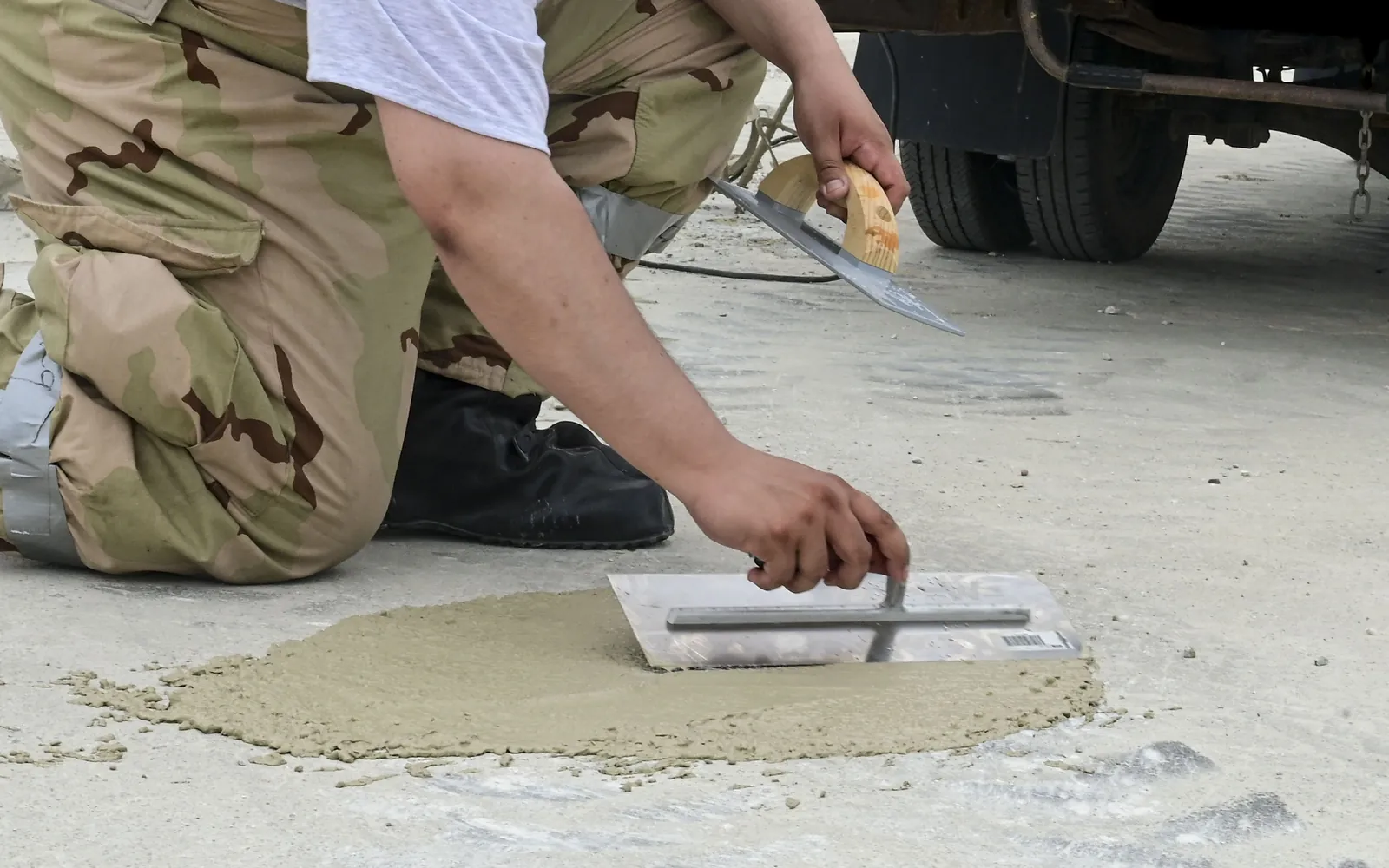
A cosmetic concrete repair restores the surface and appearance of damaged concrete, such as chipped edges and arrises, spalled areas, blowholes and surface defects, without restoring structural capacity. Using a rapid setting, polymer modified compound such as FASTSET 1 or FASTSET 30, the repair can be completed and brought back into use quickly, provided the concrete is properly prepared and the product is mixed and applied as directed on the label or by our technical support team.
Key takeaways
- FASTSET 1 and FASTSET 30 are polymer modified, cementitious repair compounds for cosmetic concrete repair.
- FASTSET 1 sets within 5 to 10 minutes and FASTSET 30 within 30 minutes, depending on temperature.
- Preparation matters most: sound, clean, dust free concrete gives the best adhesion.
- Mix only as much as you can place and finish within the working time.
- Always follow the label instructions, read the safety data sheet (available on request from UKCP) and wear suitable PPE.
What are FASTSET 1 and FASTSET 30?
FASTSET 1 and FASTSET 30 are powder repair compounds from the UKCP concrete repair range. They contain special cements, which provide a rapid set and very high early strengths, and powder polymers, which give strong adhesion to the substrate and improved surface hardness. The main difference between them is setting time.
| FASTSET 1 | FASTSET 30 | |
|---|---|---|
| Type | Polymer modified, cementitious repair compound | Polymer modified, cementitious repair compound |
| Setting time | Within 5 to 10 minutes, depending on temperature | Within 30 minutes, depending on temperature |
| Suited to | Small repairs where speed is critical | Repairs that need more time to shape and finish |
| Purpose | Cosmetic concrete repair | Cosmetic concrete repair |
Is your repair cosmetic or structural?
Before you start, decide what kind of repair you are dealing with. FASTSET is designed for cosmetic repairs. Stop and ask a structural engineer to assess the damage if you find:
- exposed or corroding steel reinforcement
- cracks that are wide, growing or pass through the element
- large areas of hollow sounding or delaminated concrete
- damage to a load bearing element
Repairs to structural concrete are covered by the BS EN 1504 series of standards and need a repair system designed for that purpose. If in doubt, contact our technical support team before starting.
What you will need
- FASTSET 1 or FASTSET 30, with the safety data sheet
- clean water
- a clean mixing vessel and a suitable mixing tool
- a hammer and bolster or small breaker, and a stiff or wire brush
- a vacuum or soft brush to remove dust
- gauging and finishing trowels, a float and a damp sponge
- PPE: waterproof gloves, eye protection, protective clothing and respiratory protection
Step by step: rapid cosmetic concrete repair
1. Check the conditions
Ask our technical support team for the recommended application temperatures. Warm conditions speed up setting and cold conditions slow it down. Where possible, avoid working in frost, direct hot sun or strong wind, all of which make a rapid setting repair harder to control.
2. Remove loose and damaged concrete
Break out all loose, cracked and weak concrete until you reach sound material. Ask our technical support team how the edges of the repair should be formed, as some repairs need square cut edges to give the new material a defined edge to work to.
3. Clean the surface
Remove all dust, laitance, oil, grease, paint and other contamination with a stiff brush, then vacuum or brush away the debris. Anything left on the surface will weaken the bond between the repair and the concrete.
4. Prepare the substrate
Cementitious repair materials are commonly applied to concrete that has been dampened, so the substrate does not draw water out of the repair too quickly. Ask our technical support team whether to pre-wet the substrate and whether a primer or bonding coat is needed. Where pre-wetting is advised, soak the area with clean water and remove any standing water, leaving the surface damp but not wet.
5. Mix a small batch
Combine the powder and clean water in the proportions given on the product label or advised by our technical support team, and mix thoroughly to a smooth, lump free consistency. Do not add extra water to make the mix easier to work, as this reduces strength. Mix only as much as you can place and finish within the working time. With FASTSET 1 that usually means several small batches. Never add water to a mix that has started to stiffen.
6. Apply and compact
Press the mortar firmly into the prepared area with a trowel, working it well into the surface to make full contact and avoid trapped air. For deeper repairs, build up in layers and ask our technical support team for the maximum layer thickness.
7. Shape and finish
Form arrises and edges using the trowel, with a straight edge or batten as a guide where needed. As the compound begins to stiffen, finish the surface with a float or damp sponge to blend it with the surrounding concrete. With FASTSET 1 the finishing window is short, so have every tool ready before you mix.
8. Protect and cure
Protect the fresh repair from rapid drying caused by sun, wind and heat, and from frost. Ask our technical support team for curing guidance and for when the repair can take traffic and loads.
9. Clean up
Clean tools and equipment with water straight after use. Once FASTSET has set, it can only be removed mechanically.
How do you choose between FASTSET 1 and FASTSET 30?
Choose FASTSET 1 for small repairs where getting the area back into use is the priority, and where the repair can be placed and finished in a few minutes. Choose FASTSET 30 where you need more time to place, shape and finish the repair, or where you are working on larger areas. In hot weather, the longer working time of FASTSET 30 can make it easier to achieve a good finish.
Safety first
Cement based powders become alkaline when mixed with water and can irritate or burn skin and eyes. Before you start:
- Read the safety data sheet (SDS) for the product and follow its advice.
- Wear PPE: waterproof gloves, eye protection, long sleeves and suitable footwear.
- Control dust: use suitable respiratory protection when handling and mixing powders, and when breaking out concrete, which can release respirable crystalline silica.
- Act quickly on contact: wash fresh mortar off skin promptly. If it gets in your eyes, rinse with plenty of clean water and seek medical advice.
Common mistakes to avoid
- Mixing more material than can be used within the working time
- Adding water to a mix that has started to stiffen
- Applying to dusty, contaminated or weak concrete
- Working in direct hot sun or strong wind without protection
- Using a cosmetic repair compound to fix structural damage
Need help with a concrete repair?
The UKCP team can advise on whether FASTSET 1 or FASTSET 30 suits your repair and how to prepare for it. Download the technical datasheets, contact technical support or request a sample. For screeding guidance, see our application guides.